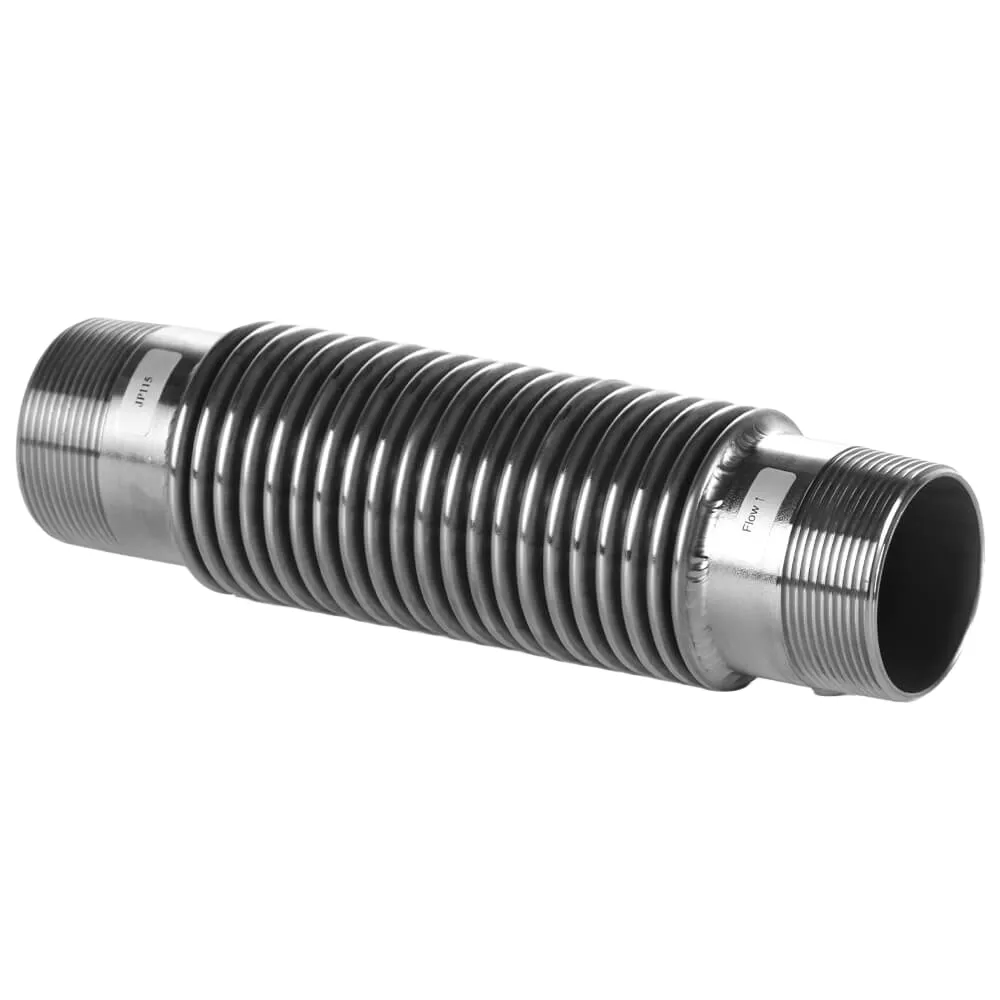
Expansion joints are essential components in many industrial, commercial and mechanical pipework systems. They are designed to accommodate movement, reduce stress and protect connected equipment from damage caused by thermal expansion, vibration and changes in operating conditions.
Without suitable movement control, pipework can experience excessive forces that affect its performance, reliability and lifespan. Understanding how expansion joints work, their different types and their applications is important when designing and maintaining efficient piping installations.
What Is an Expansion Joint?
An expansion joint is a flexible or engineered component installed within a pipework system to accommodate movement between connected sections.
Pipework naturally expands and contracts as temperatures change. This movement can create significant mechanical stress, particularly in long pipe runs or systems carrying heated fluids.
Expansion joints help manage these forces by allowing controlled movement while maintaining the integrity of the system.
Depending on their design, they may accommodate axial, lateral or angular movement.
Why Does Pipework Expand and Contract?
Thermal expansion occurs when materials increase in size as their temperature rises. Conversely, materials contract when temperatures decrease.
In pipework systems carrying hot water, steam or other heated substances, these dimensional changes can become significant.
If movement is restricted, excessive forces may develop around pipe connections, supports, valves and equipment.
Appropriate expansion allowances help prevent damage and maintain reliable operation.
Different Types of Expansion Joints
Several types of expansion joints are available, each designed to accommodate particular operating conditions and movement requirements.
Rubber Expansion Joints
Rubber expansion joints are commonly used in heating, ventilation, air conditioning and water distribution systems.
They consist of flexible rubber elements, often reinforced with fabric or other materials, and are typically connected using flanges or threaded fittings.
Their flexibility allows them to accommodate limited movement while helping isolate vibration and reduce the transmission of noise.
Common applications include pump connections, chilled water systems and mechanical plant installations.
Metal Expansion Joints
Metal expansion joints generally incorporate flexible metallic bellows designed to absorb movement within pipework.
They are often used in systems operating at elevated temperatures or pressures where rubber components may be unsuitable.
Applications include steam distribution, industrial processing and certain high-temperature installations.
Their design must account for movement capacity, pressure, temperature and fatigue life.
Fabric Expansion Joints
Fabric expansion joints use flexible composite materials to accommodate movement in ductwork and gas-handling systems.
They are commonly found in ventilation installations, exhaust systems and industrial processes involving large volumes of air or gas.
Fabric joints can accommodate movement while providing flexibility between connected duct sections.
The Importance of Expansion Joints in Pipework
Correctly specified expansion joints contribute to the reliability and performance of mechanical systems.
Managing Thermal Movement
One of their primary functions is to accommodate expansion and contraction caused by temperature changes.
By allowing controlled movement, they can reduce excessive stress on pipework and connected components.
Reducing Vibration and Noise
Pumps, compressors and other mechanical equipment can generate vibration during operation.
Certain flexible expansion joints help limit the transmission of vibration through connected pipework, potentially reducing noise and mechanical stress.
Protecting Connected Equipment
Uncontrolled pipe movement can place additional loads on pumps, valves, heat exchangers and other equipment.
Suitable expansion joints, combined with correctly designed anchors and guides, help manage these loads and protect system components.
Common Applications of Expansion Joints
Expansion joints are used across numerous industries and building services installations.
Heating and Cooling Systems
Commercial heating and chilled water systems experience temperature fluctuations during normal operation.
Expansion joints may be incorporated to accommodate movement and help maintain the integrity of pipework connections.
Industrial Processing
Manufacturing facilities frequently operate pipework carrying steam, chemicals, water and other process fluids.
Expansion joints can help accommodate thermal movement and operational vibration in these demanding environments.
Building Services Installations
Large commercial buildings often contain extensive pipework networks serving heating, cooling and water distribution equipment.
Appropriate movement control is particularly important where pipe runs extend across substantial distances or connect to sensitive mechanical equipment.
Factors to Consider When Selecting an Expansion Joint
Choosing the correct expansion joint requires an understanding of the operating environment and mechanical requirements.
Important considerations include:
- Operating pressure and temperature
- Type and magnitude of anticipated movement
- Compatibility with the transported fluid
- Pipe diameter and connection arrangement
- Vibration and fatigue requirements
- Installation space and accessibility
The arrangement of pipe anchors, guides and supports must also be considered. An incorrectly restrained expansion joint may experience excessive movement or forces beyond its design limits.
Installation and Maintenance Considerations
Correct installation is essential for long-term expansion joint performance.
Components should be installed according to manufacturer specifications, including requirements for alignment, restraint and permitted movement.
Regular inspections can help identify deterioration, corrosion, leakage, fatigue or damage to flexible elements.
Rubber components may require checks for cracking or material degradation, while metallic bellows should be examined for signs of distortion or fatigue.
Supporting Reliable Pipework Performance
Expansion joints play an important role in accommodating movement and controlling mechanical stress within modern pipework systems.
Selecting suitable materials, understanding operating conditions and ensuring correct installation can help reduce maintenance problems and improve system reliability.
When incorporated into a properly engineered pipework design, expansion joints contribute to safer operation, improved equipment protection and longer service life across industrial and commercial applications.