Volkswagen’s Xpeng Partnership Reveals a Bigger Problem Than Disappointing EV Sales
Volkswagen’s decision to partner with Chinese electric vehicle manufacturer Xpeng was supposed to mark a turning point in its struggle to regain market share in China. By combining German automotive engineering with Chinese EV technology, Volkswagen hoped to accelerate development, introduce more competitive vehicles and reconnect with buyers increasingly drawn to domestic brands.
Three years after the partnership was announced, the results are proving more complicated.
The Volkswagen ID. UNYX 08, the first electric SUV jointly developed by the two companies, has fallen considerably short of its initial sales targets. Its disappointing launch has raised questions about whether technological collaboration alone can reverse Volkswagen’s declining influence in the world’s largest automotive market.
Yet the partnership has delivered measurable engineering progress, and a second vehicle, the ID. UNYX 09 electric sedan, has now entered the Chinese market.
The situation highlights a challenge facing many established manufacturers: developing competitive electric vehicles is one thing, but convincing customers to choose them over increasingly sophisticated domestic alternatives is another.
Volkswagen ID. UNYX 08 Sales Fall Short of Expectations
According to an October 20 Reuters investigation, the Volkswagen ID. UNYX 08 averaged just 267 sales per month between its April 2026 launch and August.
Internal Volkswagen planning documents reviewed by Reuters indicated an original monthly sales target of approximately 3,622 vehicles. The actual average therefore represented less than 8% of the company’s initial expectations.
Volkswagen subsequently reduced its 2026 sales forecast for the SUV from 32,600 units to 12,300, a reduction exceeding 60%.
These figures are particularly significant because the ID. UNYX 08 was developed specifically for China, rather than being a European model adapted for the local market.
The SUV was intended to demonstrate how Volkswagen could combine its established manufacturing capabilities with Xpeng’s electric vehicle platforms, digital technologies and understanding of Chinese consumer expectations.
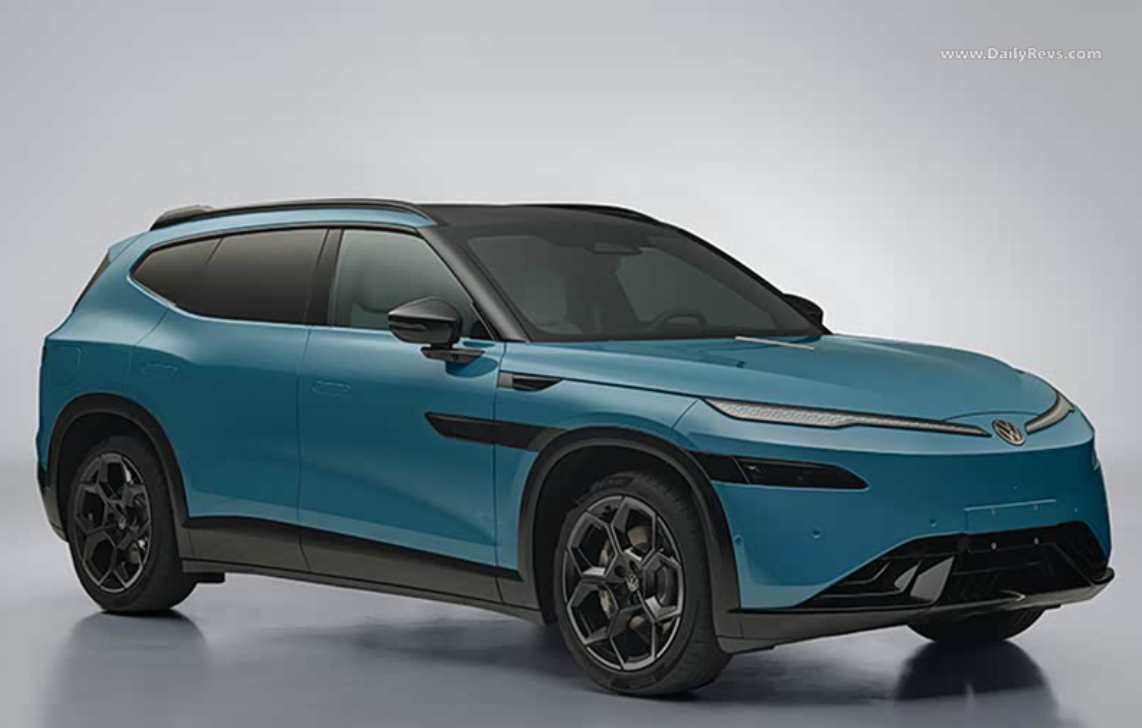
Visually, the ID. UNYX 08 also represents a departure from Volkswagen’s conventional SUV styling. Its streamlined proportions, distinctive lighting treatment and technology-focused interior reflect an effort to establish a more contemporary identity for the brand’s China-specific electric vehicles.
The 2026 Volkswagen ID. UNYX 08 gallery on DailyRevs brings together high-quality images, vehicle information and videos, allowing readers to examine the SUV’s exterior design, interior layout and technical features in greater detail.
Despite its development specifically for Chinese customers, the model entered a market where domestic manufacturers were already offering advanced electric vehicles at highly competitive prices.
Chinese Competitors Are Setting a Difficult Benchmark
Volkswagen’s disappointing sales become more apparent when compared with the performance of competing Chinese electric SUVs.
According to ThinkerCar data cited by Reuters, the ID. UNYX 08 recorded approximately 1,300 sales between April and August 2026.
Over the same period, Xiaomi sold nearly 57,000 YU7 SUVs, while Zeekr recorded more than 21,000 sales of its 7X.
Although these figures are not a perfectly controlled comparison of equivalent sales periods, they illustrate the scale of the competitive challenge facing Volkswagen.
Chinese manufacturers have become increasingly capable of combining sophisticated vehicle software, advanced driver-assistance systems, fast-charging technology and attractive pricing.
For decades, established European manufacturers could rely on their reputations for engineering quality, refinement and brand prestige to justify higher prices.
That advantage has become less decisive in China’s electric vehicle market.
Consumers now have access to domestic alternatives offering extensive digital functionality, competitive battery performance and increasingly sophisticated interiors.
The challenge for Volkswagen is no longer simply matching the technology offered by Chinese competitors. It must also provide a compelling reason for buyers to choose a Volkswagen when similar capabilities are available elsewhere.
Volkswagen’s Xpeng Partnership Has Delivered Engineering Progress
The commercial performance of the ID. UNYX 08 should not be confused with the broader technological achievements of Volkswagen’s partnership with Xpeng.
The collaboration began in 2023, when Volkswagen announced an investment of approximately $700 million for a 4.99% stake in the Chinese manufacturer.
The companies initially agreed to develop two Volkswagen-branded electric vehicles specifically for China, drawing on Xpeng’s existing vehicle technology.
The ID. UNYX 08 was developed using technology derived from the Xpeng G9 platform, allowing Volkswagen to accelerate the engineering process significantly.
The two manufacturers have also collaborated on Volkswagen’s China Electronic Architecture, a separate initiative intended to simplify vehicle electronics and support more advanced software integration.
Volkswagen announced in January 2026 that the new architecture had reached production readiness after approximately 18 months of development.
The ID. UNYX 07 became the first production model to use this architecture.
Volkswagen says the system can reduce the number of electronic control units by approximately 30%, while its localized development approach can shorten vehicle development cycles.
These improvements represent meaningful progress for a manufacturer historically associated with lengthy product-development processes.
However, faster development does not automatically produce a commercially successful vehicle.
A manufacturer may reduce engineering costs and introduce new technology more quickly, but those advantages must ultimately translate into products that customers find desirable and competitively priced.
Pricing and Distribution Add to Volkswagen’s Difficulties
Technology is not the only factor behind the ID. UNYX 08’s disappointing launch.
The SUV entered the market in April 2026 with a starting price of approximately 229,900 yuan.
That positioned it against established Chinese competitors offering extensive equipment and advanced technology.
In September, Volkswagen introduced an updated version of the SUV with a limited-time starting price of 189,900 yuan, representing a reduction of approximately 17.4% compared with the original launch price.
The company also introduced a sportier edition, expanding the vehicle’s appeal to customers seeking a more distinctive appearance.
There are early signs that these changes may be helping.
China Passenger Car Association retail figures show that ID. UNYX 08 sales increased from 133 units in July to 379 in August and 1,188 in September.
Although September’s performance was considerably stronger, one month of improved sales is insufficient to establish a sustained recovery.
Volkswagen also faces limitations in its distribution network.
According to Reuters, Volkswagen Anhui operated approximately 166 sales outlets by October 2026, compared with the more than 3,000 dealerships available through Volkswagen’s established Chinese joint ventures.
A relatively small retail network can restrict customer awareness, test-drive opportunities and access to sales and service support.
For a new model entering a highly competitive market, those limitations can be particularly damaging.
The ID. UNYX 08’s performance therefore cannot be attributed entirely to its technology, styling or pricing. Its commercial difficulties appear to reflect a combination of market positioning, distribution and intense competition.
Volkswagen Faces a Bigger Challenge in Establishing Its Identity
Beyond pricing and technology, Volkswagen must confront a more fundamental question about its position in China’s automotive market.
What makes a Volkswagen desirable when domestic manufacturers can offer comparable or more advanced technology at competitive prices?
Historically, Volkswagen built much of its reputation around solid engineering, restrained design, practical interiors and a recognizable driving experience.
Those qualities remain relevant, but the expectations of Chinese electric vehicle buyers have evolved.
Modern EVs increasingly emphasize digital interfaces, connected services, intelligent driving assistance and distinctive interior experiences.
Exterior design has also changed.
Streamlined bodywork, simplified front-end treatments, continuous lighting elements and aerodynamic proportions have become familiar features across the electric vehicle market.
These design approaches can improve efficiency and create contemporary visual appeal, but they can also make differentiation more difficult.
The ID. UNYX 08 reflects Volkswagen’s effort to respond to these expectations with a design language tailored to Chinese customers.
However, adapting to prevailing market preferences introduces another challenge: maintaining a recognizable identity while incorporating features already common among competitors.
This is not evidence that the SUV’s styling caused its disappointing sales. There is insufficient consumer research to establish that conclusion.
It does, however, illustrate the importance of product differentiation.
A successful electric vehicle must offer more than competitive specifications. Its design, technology, usability and overall ownership experience must combine to create a convincing proposition.
For Volkswagen, the challenge is to demonstrate that its China-developed vehicles offer something distinctive rather than simply matching the capabilities of established domestic alternatives.
The Volkswagen ID. UNYX 09 Is the Partnership’s Next Major Test
Volkswagen is continuing its electric vehicle offensive in China despite the ID. UNYX 08’s disappointing initial performance.
On October 24, 2026, Volkswagen Anhui launched the ID. UNYX 09, a large electric fastback sedan jointly developed with Xpeng.
The vehicle measures 5,081 mm in length and has a 3,030 mm wheelbase, positioning it in China’s competitive premium electric sedan segment.
Its development reportedly took approximately 24 months, reflecting the faster engineering processes Volkswagen is pursuing through its Chinese partnerships.
The ID. UNYX 09 also demonstrates how the company is attempting to combine advanced technology with more aggressive pricing.
The sedan launched with an official starting price of 179,900 yuan, while a limited promotional offer reduced the entry price to 169,900 yuan for a restricted number of vehicles.
All versions feature CATL battery technology with 5C fast-charging capability, while rear-wheel-drive variants offer a claimed CLTC range of up to 755 kilometres.
The sedan also incorporates Xpeng’s Turing AI computing technology and advanced driver-assistance features, along with an augmented-reality head-up display and a digital cockpit.
The 2027 Volkswagen ID. UNYX 09 gallery on DailyRevs brings together high-quality images, vehicle information and videos, allowing readers to explore the sedan’s exterior design, cabin and technical presentation in greater detail.
From a design perspective, the ID. UNYX 09 takes a different approach from the SUV, adopting an elongated fastback profile, a more pronounced sporting character and a distinctive front-end treatment.
Together, the two vehicles demonstrate Volkswagen’s attempt to establish a broader China-specific electric vehicle range using technology developed with Xpeng.
According to Reuters, Volkswagen’s internal planning documents projected average monthly sales approaching 4,900 vehicles for the ID. UNYX 09.
Whether the sedan can achieve those expectations remains uncertain.
Its lower starting price and competitive technical specifications suggest Volkswagen is responding to the lessons of the UNYX 08’s launch.
However, the sedan will face many of the same challenges, including intense domestic competition and the need to establish a stronger market presence.
Exploring Automotive Design Beyond the Headlines
The growing competition between European manufacturers and Chinese EV brands is transforming more than vehicle technology. It is also influencing automotive design, digital experiences and the way manufacturers develop and present their products.
For readers interested in exploring these developments further, DailyRevs is an automotive media platform featuring extensive high-quality vehicle image galleries, information, videos and editorial coverage of new cars, classic automobiles and independently developed design concepts.
The platform also allows visitors to save their favourite vehicle images into private, customizable folders, making it possible to organize personal collections of automotive photography, concept designs and visual references for future exploration.
DailyRevs’ Expert Insights section provides an additional space for automotive designers, engineers and other industry professionals to contribute original articles, explain their design and development processes, and share their perspectives on the evolving automotive industry.
These features allow automotive enthusiasts, designers and industry professionals to explore vehicles beyond individual news reports, while building collections of imagery and accessing insights into the creative and technical processes behind automotive development.
Volkswagen’s China Strategy Is About More Than Two Electric Cars
The difficulties surrounding the ID. UNYX 08 are part of a much larger transformation within Volkswagen’s Chinese operations.
Reuters reports that Volkswagen’s share of China’s passenger vehicle market has fallen from approximately 20% in 2019 to around 10% in 2026.
China’s contribution to Volkswagen Group profits has also declined considerably as domestic manufacturers have expanded their presence.
The rise of companies such as BYD, Geely, Xiaomi and Xpeng has altered the competitive environment for international manufacturers.
Chinese brands are no longer simply competing through lower prices. They have developed substantial capabilities in battery technology, software integration, vehicle electronics and product development.
Volkswagen’s response involves more localized engineering, faster development processes and deeper cooperation with Chinese technology companies.
Its partnership with Xpeng is therefore part of a broader effort to restructure how the company develops vehicles for the Chinese market.
The engineering improvements achieved through the collaboration could eventually benefit multiple Volkswagen products.
But their long-term commercial value will depend on whether the company can translate those capabilities into vehicles that consistently attract buyers.
Faster Development Alone Will Not Restore Volkswagen’s Position
Volkswagen’s collaboration with Xpeng demonstrates how quickly the global automotive industry is changing.
An established European manufacturer has turned to a younger Chinese competitor for vehicle technology, electronic architecture and faster development capabilities.
That would have represented an unusual reversal of roles little more than a decade ago.
Today, it reflects the growing influence of Chinese manufacturers on the direction of the electric vehicle industry.
Volkswagen has already demonstrated that the partnership can accelerate engineering and bring new vehicles to market more quickly.
The ID. UNYX 08’s disappointing initial sales show that technological progress does not automatically translate into commercial success.
Its improved September performance offers some encouragement, while the newly launched ID. UNYX 09 provides another opportunity to test Volkswagen’s approach.
Ultimately, the company’s challenge is not simply to build electric vehicles as quickly as its Chinese competitors.
It must develop products that offer convincing value, distinctive design and a recognizable ownership experience in a market where domestic manufacturers are increasingly setting the standards.
Volkswagen may have found a faster way to develop cars for China. The more difficult task is giving Chinese buyers a compelling reason to choose them