Wrestling programs have a long list of expenses before the first match ever begins.
Tournament entry fees, travel, singlets, warmups, equipment, team meals, camps, and offseason training can all put pressure on a program’s budget. For clubs and school teams with large rosters, even relatively small expenses can add up quickly.
That makes fundraising almost unavoidable for many wrestling programs.
The traditional answer is often to sell something. Wrestlers may be asked to move discount cards, candy, apparel, or other products throughout the community. Those fundraisers can work, but they also introduce inventory, money collection, delivery, and plenty of coordination for coaches and parents.
A donation-based fundraiser offers a different approach.
Instead of asking each wrestler to sell a product, the team can give athletes a simple campaign they can share directly with friends and family.
Make the Fundraiser About Wrestling
Generic donation pages get the job done, but a fundraiser tied directly to the sport can be more engaging.
A wrestling-themed fundraiser gives supporters something they immediately recognize.
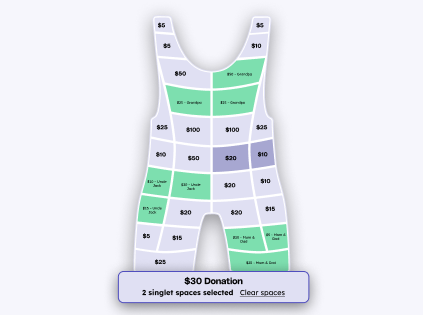
A Fill My Singlet fundraiser, for example, turns a wrestling singlet into the centerpiece of the campaign. Supporters choose an available spot, make a donation, and gradually fill the wrestler’s singlet as the fundraiser progresses.
It is a straightforward concept, which is one of its biggest strengths.
A wrestler does not need to explain an elaborate fundraising system. They can send a link to a grandparent, aunt, uncle, former coach, neighbor, or family friend and ask them to help fill their singlet.
Because the fundraiser is online, those supporters do not have to live nearby.
Visual Progress Gives Wrestlers a Reason to Follow Up
One challenge with digital fundraising is getting participants to share more than once.
An athlete sends the initial link, a few people donate, and then the fundraiser can lose momentum.
A visual fundraiser creates natural follow-up opportunities.
A wrestler can share when the singlet is halfway full, show how many spots remain, or ask supporters to help finish it before the campaign ends.
That is more interesting than repeatedly posting the same generic donation request.
It also gives the athlete a visible goal.
Less Work for the Team
Removing physical products can simplify the fundraiser for everyone involved.
There are no boxes to distribute, inventory counts to manage, or orders to deliver. Payments can be made digitally, and athletes can focus on sharing rather than collecting cash.
That matters during wrestling season, when coaches and families already have practices, meets, tournaments, travel, and weight management occupying their schedules.
Fundraising should help support the season, not become another season of its own.
For wrestling programs looking for a simple digital option, a sport-specific fundraiser can combine the familiarity of a traditional team fundraiser with the convenience of online sharing.
Sometimes the easiest way to get wrestlers engaged is to make the fundraiser actually feel like wrestling.