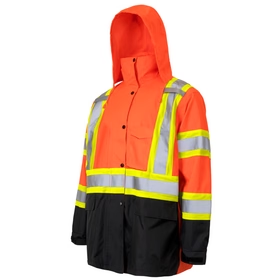
Industrial teams working in cold, wet environments face a constant challenge: maintaining visibility and protection without sacrificing comfort or safety. High visibility rain jackets must keep water out, support thermal layering, and stay compliant with visibility standards over long shifts.
The right approach to layering, choosing between shell-only and insulated jackets, using removable liners, and selecting breathable materials can help manage body heat, moisture, and ease of movement.
This article examines how layering strategies and jacket features impact both thermal comfort and the effectiveness of high-visibility protection throughout changing conditions.
Choosing Shell-Only vs. Insulated Hi-Vis Jackets: Temperature, Exposure, and Wind Chill
Selecting between a shell-only and an insulated high visibility rain jacket depends on temperature, wind, precipitation, work intensity, and how long workers remain outdoors. A shell-only jacket provides weather protection while allowing workers to adjust warmth with base and mid-layers, making it useful when conditions or activity levels vary.
An insulated jacket provides built-in warmth for longer exposure in cold, windy conditions but may feel too warm during strenuous work or milder periods and can become uncomfortable if moisture accumulates.
Review typical shift conditions, indoor and outdoor transitions, and the likelihood of sudden weather changes before choosing a design. For operations that need flexibility, a shell paired with removable liners or compatible thermal layers can support changing conditions while preserving the visibility features specified for high visibility jackets for industrial safety.
Benefits of Removable Liners and Modular Rain Jacket Systems
Modular rain jacket systems and removable liners address one of the biggest challenges in cold, wet work environments: maintaining flexibility without sacrificing visibility or protection. These systems offer several key benefits for industrial users who need to adapt quickly to changing conditions during long shifts.
First, removable liners allow workers to add or remove insulation as weather changes, supporting both warmth and breathability. This helps avoid overheating when moving indoors or during high-activity periods.
In wet conditions, being able to separate the liner from the shell also makes cleaning and drying each component easier, reducing downtime between uses. Modular systems can also help maintain the jacket’s high-visibility properties.
When liners are designed to fit without covering reflective tape or fluorescent panels, workers can maintain the garment’s intended visibility features as layers are added or removed. Some systems also use liners in contrasting colors to support visibility when the outer shell is open or partially removed.
Finally, this flexibility means one jacket system can serve across a broader range of temperatures and tasks. Workers can customize their protection without carrying multiple garments, and safety managers can standardize gear while still supporting individual comfort needs.
This approach helps keep high visibility jackets for industrial safety effective throughout the entire shift, even when weather conditions change quickly.
Breathability vs. Waterproofing: Materials and Ventilation Features to Look For
Finding the right balance between breathability and waterproofing in a high visibility rain jacket is critical for worker comfort and safety during long shifts in wet or cold conditions. Many jackets use waterproof membranes or coatings to block rain, but these same barriers can trap sweat and body heat, leading to discomfort and reduced focus.
Materials with built-in breathability, such as microporous laminates or fabrics with venting panels, help release moisture vapor from inside the jacket while still preventing water from entering.
Underarm zippers, mesh-lined vents, and adjustable cuffs are practical features that increase air movement when body temperature rises. Selecting a jacket that combines these design elements allows moisture generated by physical work to escape, reducing the risk of soaked insulation and maintaining thermal comfort.
For industrial crews who need to stay visible and dry, attention to both material technology and ventilation features makes a measurable difference in how effective rain protection remains over an entire shift.
Optimizing Layer Fit: Sizing Jackets for Comfort and Mobility Over Base Layers
A high visibility rain jacket should fit comfortably over base and mid-layers without restricting movement or leaving gaps. For industrial teams working in cold or wet conditions, choose a size based on garment measurements and the thickness of the layers workers will actually wear, not body measurements alone.
A jacket that is too tight can limit movement and compress insulating layers, while one that is too loose may allow the cuffs or collar to gap, admit water, or leave excess fabric that catches on equipment.
Test the fit by raising the arms, bending, reaching, and performing job-specific movements. Adjustable cuffs, hem drawcords, and articulated sleeves can help seal out weather without binding the arms or chest.
If workers will add or remove liners or alternate between light and heavy underlayers, look for room across the chest and shoulders while retaining a secure fit at the waist and cuffs. Proper sizing helps keep reflective tape visible and unobstructed while supporting comfort and mobility throughout the shift.
Managing Body Moisture: Sweat, Venting, and Preventing Wet Insulation
Managing body moisture is central to keeping high visibility rain jackets functional and workers comfortable throughout long shifts. Industrial work often produces sweat, especially when physical effort increases or when workers move between indoor and outdoor settings.
If sweat cannot escape, insulation layers become damp, losing their ability to retain warmth and increasing the risk of cold stress. Jackets with venting features, such as underarm zippers or mesh-lined openings, help regulate body temperature by allowing excess heat and moisture to leave the system.
Breathable fabrics also support moisture transfer, reducing the buildup of internal condensation. Wet insulation not only reduces thermal comfort but can also add unnecessary weight and reduce mobility.
Selecting rain gear that balances waterproofing with strategic venting and moisture-wicking liners helps preserve insulation performance and keeps workers drier and more focused on the job. This approach is especially important for teams facing variable weather or demanding tasks that drive up body heat.
Impact of Layering on Hi-Vis Tape Visibility and ANSI Compliance
Layering beneath a high visibility rain jacket can affect how much reflective tape remains visible and whether the garment continues to meet its applicable high-visibility requirements. Thick or poorly fitted layers may extend beyond the cuffs, collar, or hem, cover portions of the tape, or cause it to fold.
Gaps at zippers and sleeve openings can also expose inner layers and reduce the contrast between the tape and the jacket’s background, particularly in dark, rainy conditions. Choose base and mid-layers that fit smoothly beneath the jacket without creating excess bulk.
Check that insulation does not cover the tape, restrict the jacket’s closures, or push reflective bands out of position as workers move. Longer cuffs, secure closures, and a jacket with sufficient room for the intended layers can help maintain coverage while supporting comfort.
Before and during a shift, workers should check that reflective areas remain uncovered, the jacket is fully closed, and added layers have not changed the garment’s fit. Procurement teams should evaluate the complete layering system, not only the jacket, when specifying rainwear for changing cold and wet conditions.
- Tape coverage and visibility: Bulky or poorly sized layers can cover, shift, or distort reflective tape, reducing the garment’s intended conspicuity. Check the jacket while worn over the planned layers, and follow the manufacturer’s care and use instructions. If tape is obstructed or the garment’s visibility features are damaged, do not assume it still meets applicable ANSI requirements. Have it evaluated or replace it.
- Layering bulk and tape obstruction: Adding several thick layers under a high visibility rain jacket can pull, bunch, or cover reflective tape bands, reducing the garment’s visible contrast. Choose a jacket sized for the intended layers and verify that the tape remains unobstructed during normal movement. If added bulk changes the garment’s coverage or visibility features, confirm that the complete worn configuration meets applicable ANSI requirements rather than assuming an ANSI-compliant outer shell is sufficient.
Keeping Hi-Vis Effective in Dirty or Frequent-Wash Environments
Dirty, oily, or dusty work areas can make a rain jacket harder to see, particularly when grime covers high-visibility material or reflective tape. For jobs involving frequent soiling or laundering, select jackets whose care instructions match the cleaning process used at the workplace, and check whether the manufacturer identifies the garment as suitable for the intended industrial-wash routine.
Inspect color, reflective tape, seams, closures, and waterproofing after cleaning. Remove garments from service when contamination, fading, peeling, or damage compromises visibility or weather protection.
A rotation of clean jackets can help keep usable garments available while others are being washed, dried, or inspected. Follow the garment label and applicable workplace requirements rather than assuming that any jacket will retain its performance through repeated washing.
Layering strategies for high visibility rain jackets must balance warmth, moisture control, mobility, and visibility throughout a shift. Insulated jackets can support comfort during sustained cold and wind, while shell-only designs with suitable base layers or removable liners provide more flexibility when temperatures, activity levels, or work locations change.
Proper fit, ventilation, and moisture-wicking layers help reduce sweat buildup without compromising movement or weather protection. Before issuing a jacket system, test it over the layers workers will actually wear and check that cuffs, closures, reflective tape, and high-visibility panels remain unobstructed.
Regular cleaning, inspection, and adherence to the garment’s care instructions and applicable workplace requirements help preserve visibility and rain protection in demanding industrial environments.