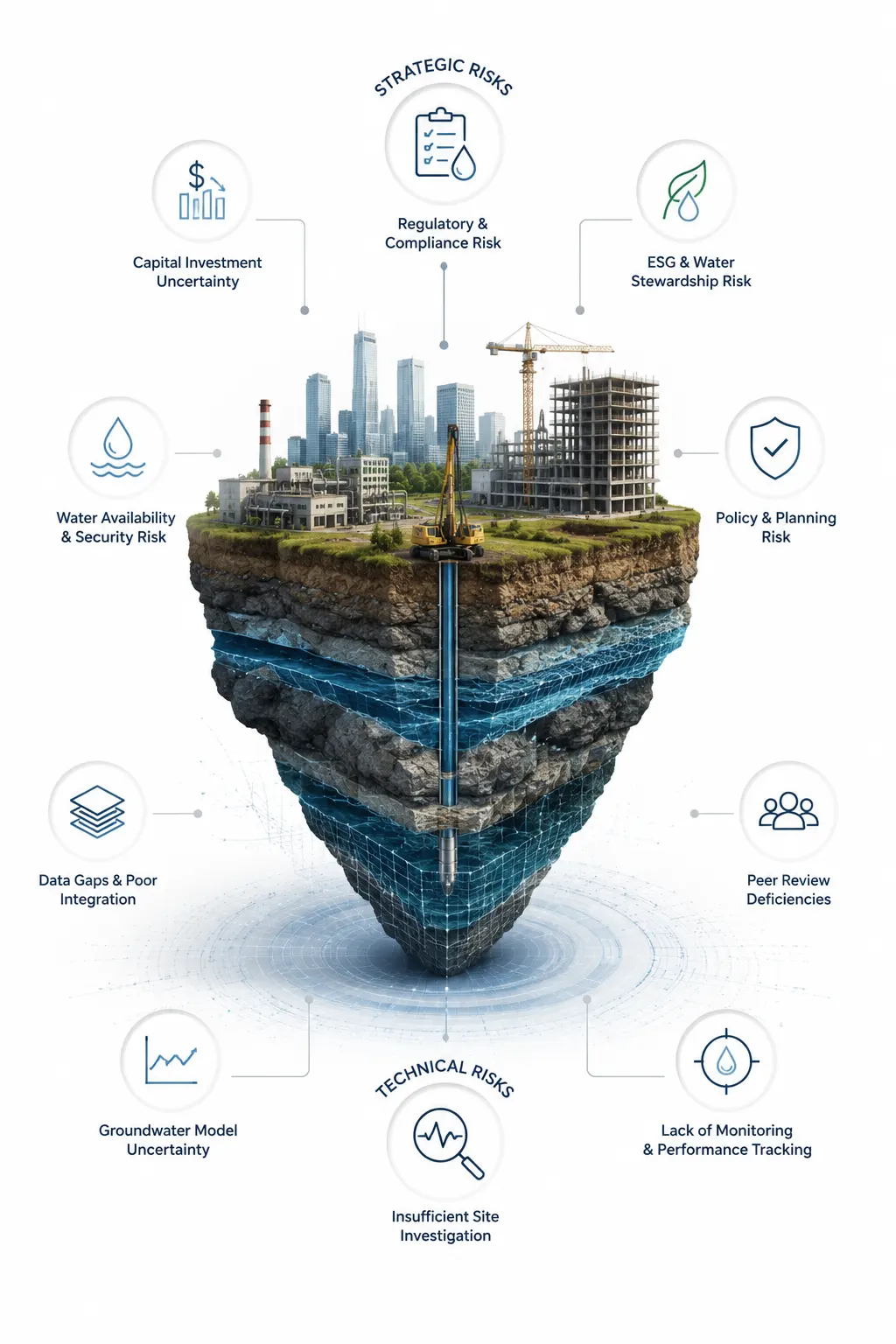
Ask a plant manager what keeps the borewells running and you will hear about pumps and power. Ask about the groundwater NOC and the answer often gets vague. That gap is now a legal risk.
The Central Ground Water Authority (CGWA) issues No Objection Certificates that let industries, infrastructure projects, mines, and large residential developments draw groundwater legally for non agricultural use. The NOC fixes the volume you may extract. The NOC also comes with conditions: digital water meters, rainwater harvesting, monitoring wells, and regular water quality tests.
Many companies treat the NOC as a one time permit. The rules treat the NOC as an ongoing obligation. That difference is where groundwater consultants earn their fee.
What the NOC asks of you after approval
Read the conditions in an actual CGWA NOC and the workload becomes clear. You must tell CGWA within 30 days once you install the required monitoring system. You must report compliance online within one year of issue. You need prior permission from CGWA before you draw more water than the NOC allows. You can apply for renewal from 90 days before expiry, and any extraction after expiry counts as illegal.
Ownership changes add more paperwork. A new owner must apply to update the NOC within 60 days of taking over.
On top of this, you must test groundwater quality at the source once a year and share the data with CGWA. Monthly water level data also goes to CGWA through its portal.
None of these tasks is hard on its own. Together, they need a person who understands hydrogeology, keeps records, and tracks dates. Most plants do not have that person.
Where your site sits decides your options
CGWA classifies every assessment unit as safe, semi critical, critical, or over exploited. That category shapes your charges and your chances.
In over exploited units, new industries cannot get a fresh NOC for groundwater at all. Users in over exploited areas pay ground water restoration charges, and users in other categories pay abstraction charges.
If you plan a new plant, warehouse, or campus, check the unit category before you buy land. A cheap plot in an over exploited block can leave you dependent on tankers or municipal supply for the life of the facility.
State rules add another layer. Telangana runs its own regime under WALTA and the 2023 Extraction Rules, so CGWA NOC does not apply there. Other states have their own authorities. A project with sites in three states may deal with three different systems.
What groundwater consultants do for NOC work
Groundwater consultants bring the technical evidence that regulators expect. For a typical industrial NOC, the work covers five areas.
Site assessment. Review of the unit category, aquifer type, depth to water, and nearby extraction. This tells you early whether your requested volume is realistic.
Hydrogeological report. Field surveys, borewell data, and in many cases pumping tests to show the aquifer can sustain your draw. A report built on site data stands up far better than a template.
Recharge design. Rainwater harvesting and recharge structures sized from infiltration tests and roof and paved areas, so the structures you build actually work.
Monitoring setup. Placement of piezometers, digital flow meters, and telemetry so your monthly data reaches CGWA on time and in the right format.
Compliance support. Annual water quality sampling, compliance reports, renewal filings, and applications to increase or modify permitted volumes.
The real cost of getting this wrong
Unauthorised extraction draws penalties under CGWA rules. The larger cost often comes later. A lapsed NOC can hold up an expansion, a bank loan, an environmental clearance, or a sale of the business. Buyers and lenders now ask for water compliance records during due diligence.
Weak data also hurts at renewal. If your piezometers show falling water levels and you have no recharge records, expect harder questions and possibly a lower permitted volume.
How to choose groundwater consultants for compliance work
Look for firms with field capability, not only filing services. Ask these questions before you sign.
Do you run your own pumping tests and geophysical surveys, or only prepare documents?
Have you handled NOCs in our state and in our unit category?
How do you design recharge structures, and how will you prove they work?
Who manages our monitoring data month to month?
How do you track renewal and reporting dates across our sites?
Good groundwater consultants explain your aquifer’s limits in plain numbers. They tell you early if a site will not support your plans, even when that is not what you want to hear.
What you can do this month
Pull out your current NOC and read every condition. Note the expiry date and the 90 day renewal window. Check whether your meters, piezometers, and telemetry are installed and reporting. Confirm when you last tested water quality and filed compliance data.
If you find gaps, fix them before an inspection or a renewal finds them for you. Groundwater rules will only get tighter as water stress grows. Companies that keep clean data and working recharge systems will renew faster and expand with fewer delays