In recent years, autonomous driving technology has moved from science fiction to real-world innovation. What once seemed like a futuristic concept is now being actively tested and implemented by major automotive and technology companies. Self-driving cars are no longer just prototypes displayed at tech expos; they are operating on public roads in many parts of the world. As this technology advances, one of its most significant promises is improving road safety. Autonomous driving has the potential to drastically reduce accidents, save lives, and transform the way we think about transportation.
Road accidents remain one of the leading causes of death worldwide. According to global road safety reports, millions of people are injured every year due to traffic accidents, and a significant number lose their lives. The majority of these accidents are caused by human error—such as distracted driving, speeding, fatigue, drunk driving, and poor decision-making. Humans, despite their experience, are prone to mistakes. This is where autonomous vehicles offer a major advantage. By reducing reliance on human drivers, autonomous systems aim to eliminate the primary cause of road accidents.
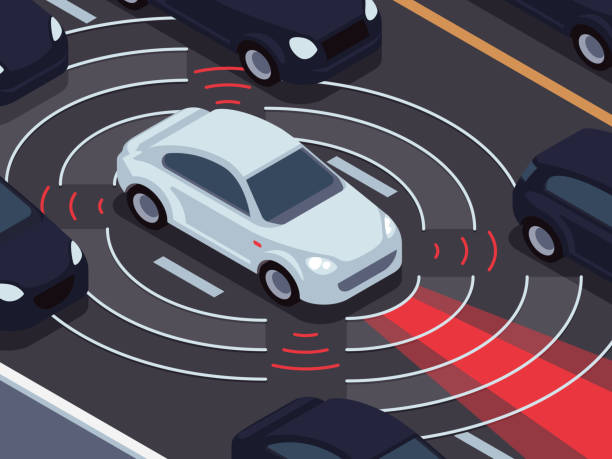
Autonomous vehicles rely on a combination of advanced technologies, including artificial intelligence (AI), machine learning, cameras, radar, lidar sensors, and GPS systems. Companies like Tesla and Waymo are leading the development of self-driving technology. These systems continuously scan the environment, detect obstacles, monitor traffic conditions, and make real-time decisions much faster than human drivers can. Unlike humans, autonomous systems do not get tired, distracted, or emotionally influenced while driving.
One of the most important ways autonomous driving enhances road safety is through collision prevention. Advanced driver-assistance systems (ADAS), which are already available in many modern vehicles, include features such as automatic emergency braking, lane-keeping assistance, adaptive cruise control, and blind-spot monitoring. These systems have already shown promising results in reducing minor and major accidents. Fully autonomous vehicles take these features even further by controlling the entire driving process, ensuring consistent adherence to traffic rules.
Another significant safety benefit is improved reaction time. Human reaction time typically ranges between one to two seconds, depending on the situation. In contrast, autonomous systems can respond almost instantly. If a pedestrian suddenly crosses the road or a vehicle ahead brakes abruptly, a self-driving system can detect the change and apply the brakes within milliseconds. This rapid response can make the difference between a near-miss and a serious accident.
Autonomous vehicles also improve road safety by maintaining optimal driving behavior. They strictly follow speed limits, maintain safe distances between vehicles, and avoid aggressive driving patterns. Human drivers often engage in risky behaviors such as tailgating or sudden lane changes. Autonomous systems are programmed to prioritize safety over speed or convenience, creating a more stable traffic flow and reducing the likelihood of collisions.
Moreover, connected vehicle technology plays a crucial role in redefining road safety. Autonomous vehicles can communicate with each other through vehicle-to-vehicle (V2V) communication systems. This allows cars to share information about road conditions, traffic congestion, accidents, or sudden braking events. For example, if one vehicle encounters black ice or an obstacle, it can instantly alert nearby vehicles. This interconnected system creates a cooperative driving environment that enhances overall road awareness.
Autonomous driving also has the potential to significantly reduce accidents caused by impaired driving. Drunk driving remains a major global issue, leading to thousands of preventable deaths each year. With fully autonomous vehicles, the need for a sober human driver becomes less critical, potentially eliminating a large portion of alcohol-related accidents. Similarly, fatigue-related crashes—common among long-distance drivers and truck operators—can be minimized as autonomous systems do not experience tiredness.
Urban areas stand to benefit greatly from autonomous driving. In crowded cities, traffic congestion often leads to frequent minor accidents and pedestrian injuries. Self-driving vehicles can navigate complex intersections more efficiently by analyzing multiple data inputs simultaneously. They can detect pedestrians, cyclists, and traffic signals with high precision. Companies such as Uber and Ford Motor Company are investing heavily in autonomous mobility solutions aimed at making urban transportation safer and more efficient.
However, while autonomous driving offers immense potential, it is not without challenges. Technical limitations, unpredictable road conditions, and ethical decision-making scenarios still pose concerns. For example, how should a self-driving car react in an unavoidable crash situation? Ensuring cybersecurity is another critical aspect, as connected vehicles could be vulnerable to hacking if not properly secured. Additionally, the transition period—where autonomous and human-driven vehicles share the road—may create new complexities in traffic management.
Public trust also plays a key role in the adoption of autonomous vehicles. Many people are hesitant to fully trust a machine with their safety. High-profile accidents involving self-driving prototypes have raised questions about reliability. To address these concerns, companies must prioritize transparency, rigorous testing, and regulatory compliance. Governments around the world are working to establish safety standards and legal frameworks to ensure responsible deployment of autonomous technology.
Despite these challenges, the long-term outlook remains promising. Studies suggest that widespread adoption of autonomous vehicles could significantly reduce traffic fatalities over time. As technology improves, machine learning algorithms will become more accurate, sensors more reliable, and systems more adaptable to complex environments. Continuous data collection from real-world driving scenarios will further enhance system performance.
In conclusion, autonomous driving is redefining road safety by addressing the root cause of most traffic accidents—human error. Through advanced sensors, AI-driven decision-making, rapid reaction times, and connected vehicle communication, self-driving technology has the potential to create safer roads for everyone. While challenges remain, ongoing innovation and careful regulation will shape a future where transportation is not only more convenient but also significantly safer. Autonomous vehicles represent a transformative step toward reducing accidents, saving lives, and building smarter, safer cities for generations to come.