Whether it’s a glass of orange juice at breakfast, a bottled smoothie after a workout, or a flavored milk from the grocery store, most people rarely think about how their favorite beverages are made. Yet every bottle or carton represents a series of steps designed to protect consumers, preserve flavor, and deliver a consistent product.
Behind the colorful packaging and familiar brands is a carefully managed production process. From selecting ingredients to testing finished products, beverage manufacturers use food science, sanitation, and technology to make drinks safe to consume.
It Starts With Quality Ingredients
Food safety begins long before a beverage reaches a production facility. The quality of milk, fruit, water, and other ingredients can affect the finished product’s safety and consistency.
For fruit juices, this might mean inspecting produce for damage, spoilage, or contamination before washing and processing. Dairy manufacturers rely on milk collection and handling procedures that help maintain quality from the farm to the processing plant.
Water quality is another important consideration. Because water is a major ingredient in many beverages, manufacturers must ensure that it meets applicable safety standards.
Even ingredients used in small quantities, such as flavorings and sweeteners, need proper handling and storage. A single contaminated ingredient can compromise an otherwise well-managed production process.
Cleaning and Sanitation Are Essential
Beverage manufacturing involves an extensive network of tanks, pipes, pumps, and filling equipment. These components contact ingredients throughout production, making sanitation a critical part of food safety.
Manufacturers establish cleaning procedures to remove product residue and reduce the risk of microbial contamination. In many facilities, automated cleaning systems circulate cleaning solutions through production equipment without requiring complete disassembly.
Employees also follow hygiene requirements, and facilities may separate different production activities to help prevent cross-contamination.
These precautions are particularly important when manufacturers produce multiple beverages using shared equipment. For example, a facility processing dairy products and nondairy drinks must manage allergens carefully to prevent unintended ingredient carryover.
How Heat Treatment Makes Beverages Safer
One of the most important steps in producing many refrigerated beverages is pasteurization.
Pasteurization uses controlled heating to reduce harmful microorganisms that could otherwise cause illness. The temperature and duration depend on the beverage, its characteristics, and the process’s safety requirements.
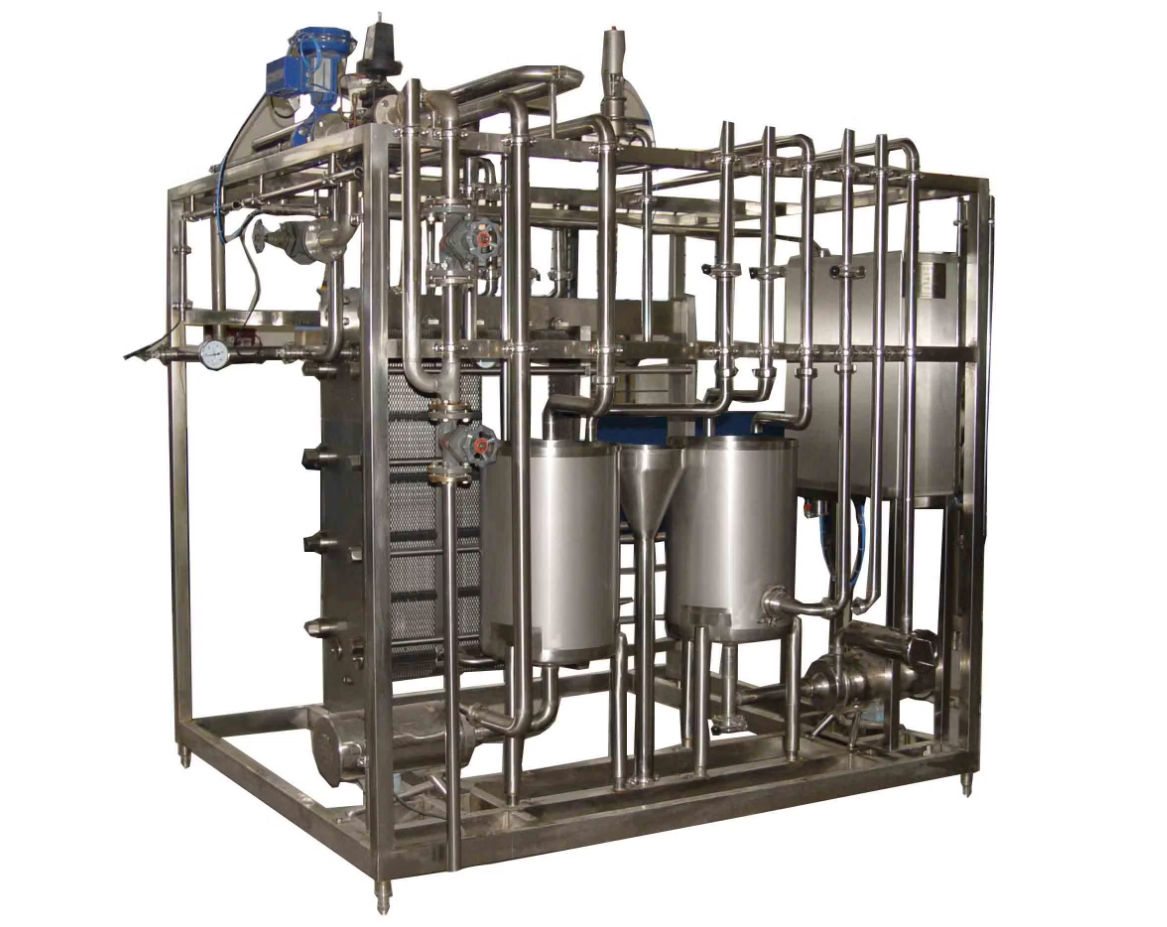
High-temperature short-time (HTST) pasteurization is commonly associated with dairy processing. In a typical milk application, the liquid is heated to at least 161°F for 15 seconds before cooling.
Commercial facilities use specialized HTST pasteurization equipment to manage the heating, holding, and cooling stages required for applicable products.
The goal is to achieve the required microbial reduction while limiting unnecessary changes to flavor and other desirable product characteristics.
Not every beverage follows the same process. Some juices undergo high-pressure processing or other validated treatments, while certain shelf-stable products receive more intensive heat treatment combined with appropriate packaging.
Packaging Protects the Finished Product
After processing, the beverage must be packaged in a way that maintains its quality and safety.
Bottles, cartons, cans, and pouches are designed for different products and storage conditions. Packaging must also withstand transportation, handling, and the environment where a beverage will be sold.
Manufacturers monitor filling operations to reduce contamination risks. Depending on the product, packaging may be sanitized before filling, and the filling environment may require additional controls.
Seals and closures are especially important. A damaged cap or improperly sealed container can compromise a beverage even when earlier manufacturing steps were performed correctly.
Packaging also provides consumers with useful information, including ingredients, allergen declarations, expiration or best-by dates, and storage instructions.
Temperature Control Doesn’t End at the Factory
For refrigerated beverages, proper temperature control remains important after production.
Cold storage and refrigerated transportation help limit microbial growth and preserve product quality. Distributors and retailers must maintain appropriate conditions as products move through warehouses, delivery vehicles, and store refrigerators.
Consumers become part of this process once they bring a beverage home.
Following refrigeration instructions, observing use-by guidance, and avoiding extended periods at room temperature can help keep perishable drinks safe.
A pasteurized beverage is not necessarily shelf-stable. Many products still require refrigeration because pasteurization does not eliminate every microorganism or prevent contamination after processing.
Testing Helps Catch Problems Before Products Reach Stores
Food manufacturers don’t rely on a single safety measure. Instead, they use multiple controls throughout production.
These may include testing incoming ingredients, monitoring processing temperatures, inspecting packaging, reviewing sanitation records, and conducting microbiological testing when appropriate.
Traceability systems also help manufacturers identify affected production lots if a problem is discovered. Lot codes link finished products to specific ingredients, production dates, and processing records.
When issues arise, these records help companies investigate the cause and decide whether to remove products from distribution.
The Science Behind Every Sip
The next time you open a carton of milk or a bottle of juice, consider the work that happened before it reached your refrigerator.
Farmers, ingredient suppliers, food scientists, equipment operators, packaging specialists, and distributors all contribute to the process.
The result is something consumers often take for granted: a convenient beverage produced through a series of carefully controlled steps designed to protect food safety and maintain quality.