A self-drive adventure through Maasai Mara, Volcanoes National Park, and Serengeti is one of the most rewarding ways to explore East Africa. Instead of following a fixed safari schedule, you have the freedom to decide where to stop, how long to spend in each destination, and which landscapes and wildlife experiences to prioritize.
This journey combines Kenya’s famous savannahs, the volcanic landscapes of the Great Rift Valley, and Tanzania’s legendary Serengeti plains. It is an ambitious multi-country road trip, but with careful planning, the right 4×4 vehicle, and the correct cross-border documentation, it can become an unforgettable African adventure.
Why Combine Maasai Mara, Volcanoes and Serengeti?
Few road trips offer such a dramatic variety of scenery and wildlife in one journey.
The Maasai Mara for self drive in Kenya is famous for its big cats, large herds of plains game, and spectacular savannah landscapes. The Mara is also part of the greater Serengeti-Mara ecosystem, making it one of the best destinations in Africa for wildlife viewing.
Volcanoes National Park self drive in Rwanda offers a completely different experience. Here, the open savannah is replaced by dense montane forests, bamboo, mist-covered volcanoes, and one of Africa’s most famous wildlife experiences: mountain gorilla trekking.
Then comes the Serengeti, where enormous grasslands support huge populations of wildebeest, zebra, gazelles, lions, cheetahs, elephants and other wildlife.
Together, these destinations create a road trip combining:
- Big Five safari experiences
- The Great Migration ecosystem
- Mountain gorilla trekking
- Volcano scenery
- African savannahs
- Remote camping
- Cross-border adventure
- Independent 4×4 travel
The Best Route for a Maasai Mara, Volcanoes and Serengeti Self-Drive
The exact route depends on where you start and whether you want to visit Rwanda or Uganda for the Volcanoes experience.
A popular itinerary is:
Nairobi → Maasai Mara → Uganda/Rwanda → Volcanoes → Tanzania → Serengeti → Ngorongoro → Arusha
However, this is not simply a matter of picking up a rental car in Nairobi and driving wherever you want.
The biggest consideration is international vehicle authorization.
Before booking your vehicle, you need to establish:
- Which country the vehicle is registered in
- Whether the rental company permits cross-border travel
- Which countries are covered by the rental agreement
- Whether temporary importation is permitted
- What insurance is required
- Which border documents are needed
- Whether additional cross-border fees apply
- Whether the vehicle can enter national parks in each country
For many travelers, using separate rental vehicles in different countries is more practical.
Maasai Mara Self-Drive
The roads approaching the reserve vary considerably. While major sections are paved, the final approaches and roads inside the safari ecosystem can include rough gravel, corrugations, mud and deep tracks, particularly during rainy periods.
A proper 4×4 is therefore highly recommended.
What can you see in Maasai Mara?
The Mara is particularly famous for:
- Lions
- Leopards
- Cheetahs
- Elephants
- Buffalo
- Giraffes
- Hippos
- Crocodiles
- Wildebeest
- Zebras
- Gazelles
- Hyenas
During the migration season, enormous herds of wildebeest and zebra move through the Mara ecosystem from the Serengeti.
Even outside migration periods, however, the Maasai Mara remains an excellent year-round wildlife destination.
Self-Driving in Maasai Mara
Self-driving gives you considerable freedom, but it requires more preparation than a conventional guided safari.
You should be comfortable with:
- Driving on rough tracks
- Navigating using GPS
- Recovering a vehicle from difficult terrain
- Changing a tyre
- Checking tyre pressure
- Driving long distances
- Managing fuel
- Reading wildlife behaviour
- Following park regulations
Wildlife should always have priority.
Never drive too close to animals, chase wildlife, block another vehicle’s route, or leave the vehicle in prohibited areas.
From Maasai Mara Towards Volcanoes
After exploring the Mara, the next stage is the most logistically complicated part of the journey.
If you are travelling toward Volcanoes National Park in Rwanda, you will need to cross international borders and potentially travel through Uganda.
The exact route depends on your rental agreement and the border crossings available for your vehicle.
This is where planning becomes essential.
A vehicle rented in Kenya may not automatically be permitted to enter Uganda or Rwanda. Likewise, a Tanzanian rental vehicle cannot simply be assumed to be permitted throughout Kenya, Uganda and Rwanda.
Cross-Border Rental Requirements
Before departure, ask your rental company about:
- Cross-border authorization
- Temporary import permits
- COMESA or applicable regional insurance
- Third-party insurance
- Vehicle registration documents
- Customs requirements
- Border fees
- Letter of authorization from the rental company
- Driver’s license requirements
- Additional security deposits
- Emergency assistance across borders
Do not wait until you reach the border to discover that your rental agreement does not allow international travel.
Volcanoes National ParkVolcanoes National Park is one of the highlights of Rwanda.
Located in the Virunga Mountains, the park is home to endangered mountain gorillas and offers a completely different experience from the open plains of the Mara and Serengeti.
The landscape is spectacular, with volcanic peaks rising above dense forests and agricultural valleys.
Gorilla Trekking
For many travelers, the main reason to visit Volcanoes National Park is mountain gorilla trekking.
Gorilla trekking is not a normal safari activity. Visitors hike through mountainous forest accompanied by trained guides and trackers in search of habituated gorilla families.
The experience can involve several hours of hiking, depending on the location of the gorilla group.
A gorilla trekking permit is required.
Because permits can be limited, travelers planning this type of trip should arrange their trekking dates well in advance.
How Long Should You Spend in Volcanoes?
For a combined self-drive adventure, 2–3 nights is a good starting point.
A possible schedule is:
Day 1: Arrive in the Volcanoes region
Day 2: Gorilla trekking
Day 3: Golden monkey trekking or cultural experience
Day 4: Continue toward Tanzania
If gorilla trekking is your primary reason for visiting Rwanda, allowing an additional night gives you more flexibility.
From Volcanoes to Serengeti
The journey from the Virunga region toward Tanzania is another major logistical section.
Unlike a conventional safari itinerary where a company handles every transfer, self-drive travelers need to think about:
- Border crossings
- Immigration
- Customs
- Vehicle documentation
- Insurance
- Fuel
- Road conditions
- Navigation
- Accommodation
- Park entry arrangements
This is one reason that separate vehicle rentals can make the journey much easier.
You could complete the Kenya section with a Kenyan rental vehicle, arrange your Rwanda/Uganda section separately, and then use a Tanzanian 4×4 for the Serengeti.
Serengeti Self-Drive Safari
The Serengeti is enormous, so you should avoid treating it as a destination that can be properly explored in just one day.
For self-drive travelers, 3–5 nights is a much better starting point.
Depending on the season, you can explore different areas including:
- Central Serengeti
- Seronera
- Western Serengeti
- Northern Serengeti
- Lobo
- Ndutu area during the appropriate season
Your route should be adjusted according to wildlife movements, road conditions and the time of year.
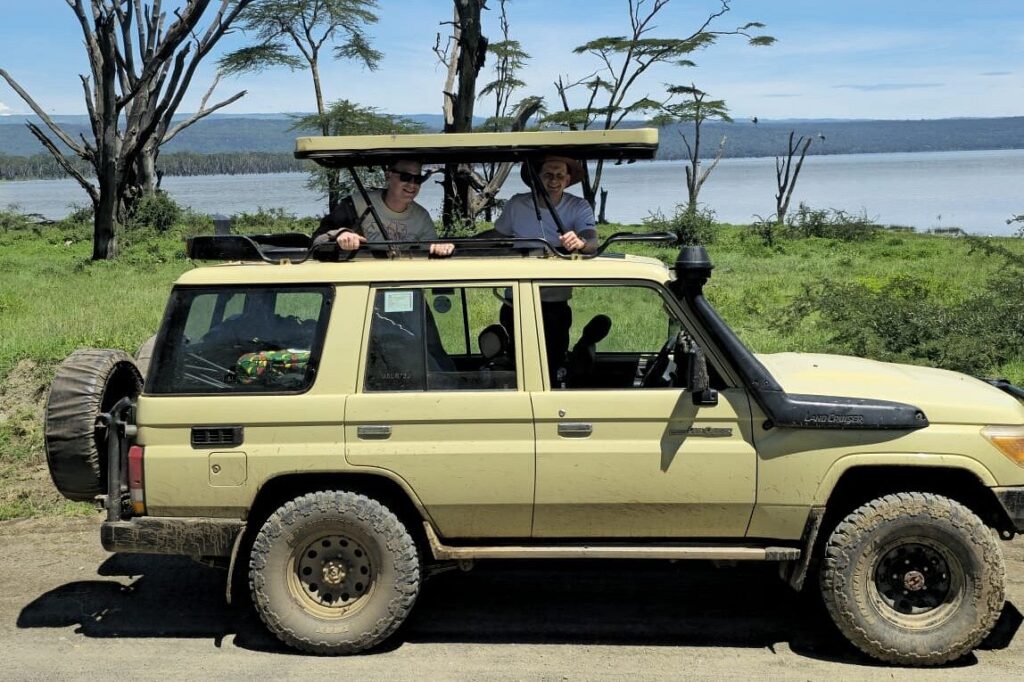
Why a Toyota Land Cruiser Is Ideal
For a multi-country East African safari, the vehicle is extremely important.
A well-maintained Toyota Land Cruiser 4×4 is one of the best choices for this type of trip.
A suitable safari vehicle should ideally have:
- Genuine 4WD
- High ground clearance
- Strong suspension
- Reliable diesel engine
- Good spare tyres
- Dual fuel tanks where available
- Long-range capability
- Recovery equipment
- Roof rack
- GPS/navigation capability
- Good luggage capacity
- Reliable communication equipment
For camping trips, a Land Cruiser with a rooftop tent provides additional flexibility.
You can carry your camping equipment, cooking gear, water, food and other supplies while maintaining the ability to travel on rough safari tracks.
Rooftop Tent Self-Drive Safari
For adventurous travelers, combining this route with a rooftop tent can make the trip even more memorable.
A typical camping setup may include:
- Rooftop tent
- Mattress
- Sleeping bags
- Camping chairs
- Camping table
- Cooking equipment
- Gas stove
- Cooking utensils
- Cooler or fridge
- Water containers
- Solar equipment
- Recovery equipment
However, camping inside national parks is not the same as camping at a normal campsite.
Always use designated campsites and follow the rules of the relevant park authority.
Maasai Mara vs Serengeti
Maasai Mara and Serengeti are part of the same ecosystem, but the experience can feel very different.
| Feature | Maasai Mara | Serengeti |
|---|---|---|
| Country | Kenya | Tanzania |
| Size | Relatively compact | Extremely large |
| Big-cat viewing | Excellent big-cat viewing | Excellent big-cat viewing |
| Migration highlights | Famous Mara River crossings | Famous migration routes |
| Landscape | Savannah and rolling hills | Vast open plains |
| Safari duration | Excellent for shorter safaris | Ideal for longer safaris |
| Self-drive potential | Strong self-drive potential | Excellent self-drive potential |
If you have enough time, visiting both is worthwhile.
The Serengeti is not simply a larger version of the Mara. Each side of the ecosystem offers different landscapes, wildlife concentrations and seasonal experiences.
Best Time for the Trip
The best time depends heavily on what you want to see.
June to October
This is one of the most popular periods for East African safaris.
You can generally expect:
- Dry conditions
- Good wildlife visibility
- Excellent game viewing
- Strong migration activity in parts of the ecosystem
- Easier road conditions
It is also a popular time for gorilla trekking.
November to February
This period can also be excellent.
The southern Serengeti and Ndutu region can become particularly interesting during the wildebeest calving season.
Volcanoes remains a year-round destination, although rainfall can affect trekking conditions.
March to May
The long rains can make some roads more challenging.
However, this period can offer:
- Fewer tourists
- Green landscapes
- Excellent photography
- Lower-season travel opportunities
For self-drive travelers, road conditions should be monitored carefully.
How Many Days Do You Need?
A rushed trip is not recommended.
For all three destinations, consider at least 14–21 days.
Example 18-Day Itinerary
Day 1: Nairobi
Day 2: Nairobi → Maasai Mara
Day 3: Maasai Mara
Day 4: Maasai Mara
Day 5: Maasai Mara → Kenya/Uganda border
Day 6: Continue toward Volcanoes
Day 7: Volcanoes National Park
Day 8: Gorilla trekking
Day 9: Volcanoes / golden monkeys
Day 10: Begin journey toward Tanzania
Day 11: Tanzania border and onward travel
Day 12: Serengeti
Day 13: Serengeti
Day 14: Serengeti
Day 15: Serengeti
Day 16: Serengeti → Ngorongoro
Day 17: Ngorongoro Crater
Day 18: Ngorongoro → Arusha
This itinerary should be treated as a framework rather than a fixed schedule. Border procedures and road conditions can make travel times unpredictable.
Fuel Planning
Fuel planning is essential for self-driving in East Africa.
You should never assume that a fuel station will be available when you need one.
Before entering remote areas:
- Fill the vehicle completely
- Know the approximate fuel range
- Carry emergency fuel where legally permitted
- Check the next reliable fuel point
- Avoid unnecessary detours
- Monitor fuel consumption
- Consider the extra consumption caused by rough tracks
A diesel Land Cruiser with adequate fuel capacity is particularly useful for long safari routes.
Navigation and Communication
Do not rely exclusively on mobile phone coverage.
A good self-drive setup should include:
- Offline maps
- GPS navigation
- Paper or backup maps
- Local SIM cards
- Power banks
- Vehicle charging
- Emergency contacts
- Park maps
- Reliable communication equipment
Mobile coverage can be inconsistent in remote safari areas.
Park Fees and Permits
One of the most important things to understand before starting the journey is that national park fees are separate from vehicle rental costs.
Depending on your route, you may need to budget for:
- Park entrance fees
- Vehicle fees
- Camping fees
- Conservation fees
- Crater-related fees
- Gorilla trekking permits
- Border charges
- Insurance
- Camping fees
- Special permits
Gorilla trekking permits in particular should be arranged before travelling.
Always verify current fees and regulations directly with the relevant park authorities or your local safari operator because charges and procedures can change.
Can You Use One Rental Car for the Entire Journey?
Technically, this depends on the rental company and the countries involved.
In practice, one vehicle for Kenya, Uganda/Rwanda and Tanzania can be significantly more complicated than renting locally in each country.
A rental company needs to authorize the vehicle for international travel, and additional insurance, customs and documentation may be required.
For this reason, travelers should ask specifically:
“Can I take this rental vehicle into Kenya, Uganda/Rwanda and Tanzania, and return it in a different country?”
Do not assume that a standard rental agreement covers this.
A Better Strategy for Independent Travelers
For travelers who want maximum flexibility without excessive border complications, consider dividing the trip into sections.
Kenya Section
Nairobi → Maasai Mara → Kenya border
Use a Kenyan-registered 4×4.
Rwanda/Uganda Section
Explore the Volcanoes region using a vehicle authorized for the relevant country.
Tanzania Section
Start a Tanzanian rental in or near the border/Arusha region and continue:
Tanzania → Serengeti → Ngorongoro → Arusha
This approach can simplify vehicle insurance, documentation and park access.
Is This Route Suitable for First-Time Self-Drivers?
It depends on your previous experience.
If you have never driven off-road before, this is not the easiest first self-drive adventure.
The route involves:
- Long distances
- Rough roads
- Wildlife areas
- International borders
- Remote locations
- Changing weather
- Limited services
- Navigation challenges
Experienced 4×4 travelers will generally find the journey much more manageable.
If you are a first-time African self-driver, consider hiring a professional driver for the more difficult sections or beginning with a shorter Tanzania self-drive safari.
Essential Documents
Before departure, make sure you have all relevant documents for your nationality and rental arrangement.
These may include:
- Passport
- Valid driving license
- International Driving Permit where required
- Rental agreement
- Vehicle registration documents
- Cross-border authorization
- Insurance documents
- Temporary import documentation
- Park permits
- Gorilla trekking permit
- Accommodation confirmations
- Emergency contacts
Requirements vary by country and can change, so confirm them before departure.
Tips for a Successful East Africa Self-Drive1. Choose the right vehicle
Do not compromise on vehicle quality for a long cross-border safari.
2. Plan fuel carefully
Remote safari areas can have long distances between fuel points.
3. Keep your itinerary flexible
Border crossings and rough roads can take longer than expected.
4. Book gorilla trekking early
Permits are limited and dates can sell out.
5. Carry emergency supplies
Water, food, spare tyres, recovery equipment and basic tools can be invaluable.
6. Respect wildlife
Never approach animals aggressively or leave the vehicle where it is prohibited.
7. Download offline maps
You may lose mobile connectivity in remote areas.
8. Check road conditions
Rain can dramatically change some roads.
9. Confirm cross-border permission
Get written confirmation from the rental company before departure.
10. Allow extra days
A multi-country African road trip should never be planned too tightly.
Frequently Asked QuestionsCan I self-drive from Maasai Mara to Serengeti?
Yes, it is possible to travel between the two ecosystems, but international border procedures and rental-car authorization must be arranged in advance. The vehicle must be legally permitted to cross the border.
Can I combine Maasai Mara and Volcanoes National Park?
Yes. This creates an exciting combination of savannah safari and mountain gorilla trekking. However, the journey requires careful planning because you will cross international borders.
Can I drive a rental car from Kenya to Rwanda?
This depends on the rental company, vehicle registration and cross-border permissions. Always confirm this before booking.
Can I take a Tanzanian rental vehicle into Kenya?
Some rental companies may allow cross-border travel under specific conditions, while others restrict their vehicles to Tanzania. Written authorization and appropriate insurance are essential.
Is a 4×4 necessary?
For a trip involving Maasai Mara, Volcanoes and Serengeti, a capable 4×4 is strongly recommended.
How many days should I allow?
At least 14 days, but 18–21 days will give you a much more comfortable trip.
Can I camp during the trip?
Yes. Camping is possible at designated campsites, and a rooftop-tent 4×4 can be an excellent option for adventurous travelers.
What is the best vehicle?
A properly equipped Toyota Land Cruiser 4×4 is an excellent choice for this type of journey because of its ground clearance, durability, reliability and suitability for rough safari roads.
Start Planning Your Maasai Mara, Volcanoes & Serengeti Self-Drive Adventure
A self-drive journey through Maasai Mara, Volcanoes and Serengeti is more than a conventional safari. It is a genuine East African overland adventure combining wildlife, mountains, forests, cultures and some of the most spectacular landscapes on the continent.
The key to a successful trip is preparation.
Choose a reliable 4×4, understand the border requirements, arrange the correct insurance and permits, plan your fuel carefully, and allow enough time to deal with unexpected delays.
For travelers who want freedom, adventure and the opportunity to explore East Africa at their own pace, this is one of the ultimate self-drive safari routes.
Planning a self-drive safari in East Africa? We can help arrange a suitable 4×4 rental, rooftop-tent camping equipment, cross-border documentation and one-way rental solutions for your Kenya, Uganda/Rwanda and Tanzania adventure.