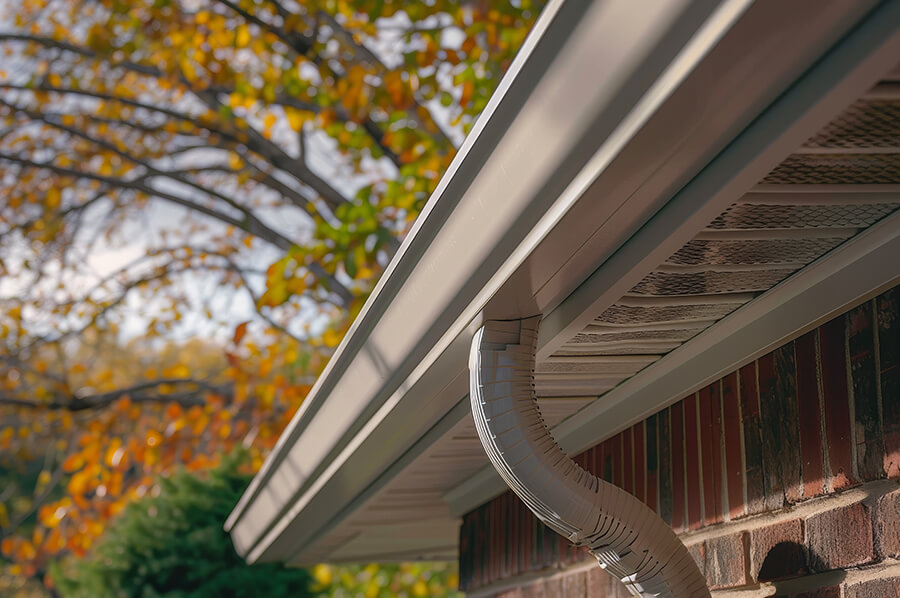
Small downspout details can decide whether a gutter system drains smoothly or struggles during heavy rain. Proper gutter installation looks beyond the visible pipe and considers outlet size, placement, bends, fastening, discharge, and the amount of roof water each downspout must carry. Careful planning keeps runoff moving away from the house instead of backing up at the eaves or collecting beside the foundation.
Downspout Size Has to Match the Water Coming Off the Roof
Downspout dimensions affect how quickly water can leave the gutter during a storm. Standard 2×3 pipes work for many homes, while larger 3×4 downspouts provide more capacity for broad roof sections, steep slopes, or areas where several roof planes feed the same gutter. Wider openings also give leaves and small debris more room to pass without lodging near the outlet. Contractors planning a rain gutter installation should compare roof drainage area with gutter and outlet capacity rather than selecting pipe size by appearance alone. Correct sizing keeps the downspout from becoming the narrowest point in an otherwise well-designed drainage system.
Where Should Downspouts Be Placed for Better Drainage?
Placement matters because runoff does not reach every part of a roof edge at the same rate. Valleys can send concentrated streams toward one small area, while long roof planes may place a steady load on an entire gutter run. Locating a downspout near these high-flow sections gives water a shorter route out and reduces pressure on the channel.
Spacing also changes how far runoff travels before reaching an outlet. Long gutters may need a downspout at both ends or another outlet closer to the middle, depending on pitch and roof area. Homeowners searching for gutter companies near me can ask how a proposed layout handles valleys, corners, dormers, and other features instead of accepting evenly spaced downspouts that ignore actual water movement.
Outlet Openings Can Restrict an Otherwise Large Downspout
Outlet size is easy to overlook because much of it sits inside or beneath the gutter. A 3×4 downspout cannot deliver its full drainage capacity if water first passes through an undersized opening cut for a smaller pipe. Properly matched outlets create a smoother transition from gutter to downspout and help the system empty faster during hard rain. Experienced gutter installation crews also secure these connections carefully because loose fittings can leak behind the pipe or allow water to run along fascia boards. Adequate opening size becomes especially important where one downspout serves a large section of roof.
Too Many Sharp Bends Can Slow the Water Down
Elbows allow installers to bring a downspout from the gutter toward the wall and direct it around trim or other exterior features. Each turn, however, changes the path of flowing water and creates another location where leaves or twigs can become trapped. Straighter routes generally provide better drainage and make future cleaning easier.
Exterior design sometimes requires several direction changes, particularly around deep roof overhangs, decorative ledges, or lower roof sections. Skilled installers keep those bends as simple as possible while maintaining a neat appearance against the siding or brick. A dependable gutter company should also avoid flattened sections or poorly fitted elbows that reduce the pipe opening and create unnecessary restrictions.
Secure Fastening Keeps Downspouts From Shifting Over Time
Fasteners hold downspouts close to the structure while allowing water to move through a stable, properly aligned pipe. Loose straps can let sections twist, separate at joints, or pull away from the wall during wind and storms. Solid attachment becomes even more important on tall two-story runs, where several connected pieces must stay aligned from the gutter outlet to the ground. Quality rain gutter installation uses suitable brackets and spacing for the wall material without crushing the downspout or making future maintenance difficult. Stable pipes also reduce movement around elbows and seams where leaks can develop.
Ground-Level Discharge Matters as Much as the Roof Connection
Water still needs somewhere safe to go after traveling down the pipe. A downspout that ends directly beside the foundation can create erosion, muddy soil, or repeated moisture around lower walls even if the gutter above works perfectly. Extensions, splash blocks, or underground drainage lines can carry runoff farther from the structure.
Grading determines whether that discharge continues moving away or circles back toward the house. Sloped soil can help direct water toward a lawn or approved drainage area, while low spots may allow it to collect close to the building. Qualified gutter companies near me should consider the ground around each proposed outlet before finalizing downspout locations, since changing the pipe position early may prevent awkward extensions later.
Downspout Planning Should Be Part of the Full Gutter Design
Complete drainage design connects roof area, gutter pitch, outlet size, pipe capacity, bends, mounting, and final discharge rather than treating downspouts as simple finishing pieces. Balanced placement can prevent one pipe from carrying far more runoff than another, while suitable sizing helps each outlet keep pace during strong storms. Apollo Roofing provides seamless gutter installation designed to collect roof runoff and move it safely away from the home. Their team helps homeowners select suitable gutter materials and installs the system with attention to drainage, downspout placement, and long-term water control. They also provide gutter repairs, cleaning, and gutter guards for homeowners who need ongoing protection or improvements to an existing system.