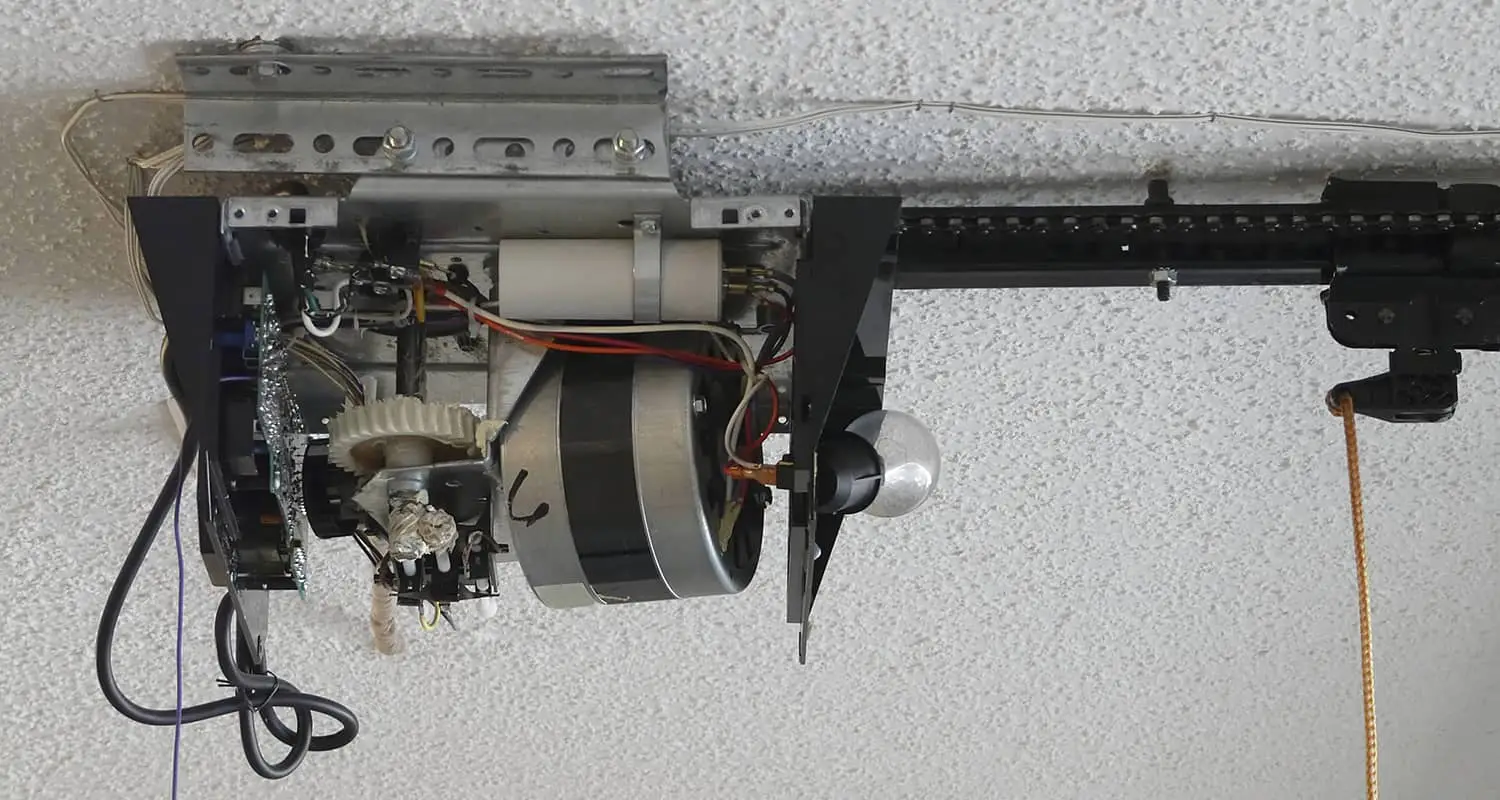
Automatic garage door openers are sophisticated electromechanical assemblies that integrate digital logic control, radio frequency reception, and high-torque motor drives. While property owners often view an opener as a simple motorized winch, modern drive units rely on a precise feedback loop of optical sensors, current limit sensors, and mechanical travel switches.
When an opener begins clicking repeatedly, humming without movement, or reversing mid-cycle, systematic diagnostic troubleshooting is required to isolate whether the failure stems from logic board degradation, mechanical drive wear, or external environmental interference.
The Core Subsystems of Modern Opener Units
To accurately diagnose an operational failure, it is essential to understand how the primary subsystems within a residential or commercial opener interact during a single cycle.
Electronic Control and Logic Boards
The logic board acts as the central processor, receiving activation signals from wireless remotes, wall consoles, or smart home gateways. It manages power delivery to the motor, interprets signals from safety photo-eyes, and continuously monitors current draw across the motor coils. If current draw spikes abruptly, indicating physical resistance, the logic board triggers an emergency reversal to prevent crushing accidents.
Motor Assembly and Gear Reductions
Most ceiling-mounted residential openers utilize AC induction or DC permanent-magnet motors. Because electric motors spin at high RPMs with low initial torque, a gear reduction assembly, typically consisting of a helical worm gear and a main drive shaft gear, is required to translate high rotational speed into low-speed, high-torque linear pull along the trolley rail.
Position Limit and Safety Monitoring
Physical or electronic limit switches define the exact starting and stopping points of the door travel path. In older models, contact switches physically strike contact plates on a threaded shaft. Modern smart openers utilize optical rotational encoders mounted directly on the motor shaft to count exact motor revolutions down to the millimeter.
Differentiating Mechanical Gear Wear from Board Failures
One of the most frequent symptoms reported by homeowners is a motor unit that hums loudly when activated but fails to move the overhead door. This symptom points to two distinct potential root causes depending on the internal drive configuration.
Stripped Nylon Drive Gears
To protect the motor housing from catastrophic binding, manufacturers design internal drive gears out of deliberate “sacrificial” nylon materials. If a garage door becomes heavy or unbalanced due to broken counterbalance springs, the motor continues attempting to lift the deadweight. The steel motor worm gear gradually shears the soft teeth off the internal plastic drive gear. The resulting symptom is a running motor sound accompanied by complete trolley immobility.
Motor Capacitor Failure
If the motor hums briefly and trips the circuit breaker without gear rotation, the issue often resides in the start capacitor. Single-phase AC motors require an initial phase-shifted electrical boost from a capacitor to establish rotation direction. When the capacitor degrades or leaks dielectric fluid, the motor remains locked in place, drawing excess current until thermal safety cutoffs trigger.
Radio Frequency Interference and Logic Anomalies
Modern openers operate on standardized radio frequencies, typically between 310 MHz and 390 MHz, utilizing rolling code technology to prevent signal interception. However, urban residential environments frequently suffer from localized electromagnetic interference (EMI) that degrades remote signal range or prevents remote operation entirely.
Common sources of signal degradation include non-shielded LED light bulbs installed inside the opener housing itself. Certain aftermarket LED driver circuits emit high levels of radio noise across the 300 MHz band, effectively blinding the opener’s internal receiver antenna whenever the light bulbs are illuminated.
When diagnosing short remote range, removing installed LED bulbs and testing remote responsiveness from the driveway can immediately confirm or rule out localized frequency jamming.
Optical Safety Sensor Alignment and Voltage Testing
Federal regulatory standards require all automated residential garage door openers to feature non-contact safety reversing sensors positioned no higher than six inches above the floor level. These photo-eyes operate via an infrared beam transmitted from a sending unit to a receiving unit.
When the logic board detects an interrupted beam during downward travel, it immediately stops travel and reverses the door to the fully open position, typically flashing the overhead operator lights as a diagnostic code.
Troubleshooting photo-eye anomalies involves systematically verifying physical alignment, clean optical lenses, and correct terminal wire voltage:
- Physical Tracking: Vibrations from daily door operation or minor impacts from lawn equipment can knock sensor brackets out of parallel alignment, breaking the infrared pathway.
- Ambient Sunlight Washout: Direct low-angle sunlight hitting the receiving eye lens can overwhelm the phototransistor, causing false obstruction signals during specific hours of the day.
- Wire Strain and Corrosion: Low-voltage bell wire running from the motor head to the sensor brackets can suffer wire nicking or terminal corrosion, causing intermittent power drops.
The Importance of Professional Electrical Diagnostics
While simple visual checks, lens cleaning, and remote battery replacements are suitable home maintenance tasks, opening a main drive unit or re-calibrating force limits requires technical precision. Incorrectly increasing the down-force limits on a struggling opener to bypass a binding door panel does not solve the underlying mechanical problem; it merely forces the motor to overpower dangerous structural resistance, risking catastrophic failure or motor burnout.
When internal logic boards fail, motor gears strip completely, or high-tension door dynamics prevent smooth opener operation, engaging certified technicians through EK Garage Door Opener Repair Chicago ensures that circuit boards, drive gears, and photo-eye safety protocols are restored to exact factory specifications.
Maintaining an automatic opener through accurate mechanical diagnosis, proper drive gear lubrication, and proactive sensor alignment guarantees dependable everyday convenience, quiet motor performance, and reliable home safety for years to come.